Lifting barbells can transform your body, but going solo is a risky game. A spotter—your trusty sidekick in the gym—ensures safety, boosts performance, and makes workouts more fun. This article dives into why you should never lift heavy barbells alone, sharing practical tips, real stories, and science-backed reasons to always have a partner by your side.
The Dangers of Lifting Alone
Lifting heavy barbells without a spotter is like tightrope walking without a net—possible, but why risk it? The American College of Sports Medicine reports that weightlifting injuries send over 500,000 people to the ER annually in the U.S. A spotter can prevent accidents, correct form, and keep you motivated.
Common Risks of Solo Lifting
Without a spotter, you’re vulnerable to dropping weights, muscle strains, or even getting pinned under a barbell. Fatigue can sneak up, making that last rep dangerous. A spotter acts as your safety net, catching mistakes before they turn into injuries.
Real-Life Consequences
Consider Jake, a 28-year-old who tried bench pressing alone at home. “I thought I had one more rep in me, but the bar slipped,” he recalls. “I was stuck until my roommate heard me yell.” Jake’s bruised chest and ego could’ve been spared with a spotter.
What Is a Spotter and Why Do You Need One?
A spotter is someone who assists during weightlifting, ensuring safety and proper form. They’re essential for heavy lifts like bench presses, squats, or overhead presses. Beyond safety, spotters boost confidence and push you to achieve more.
The Role of a Spotter
A spotter watches your form, helps lift the barbell if you struggle, and provides encouragement. They don’t lift for you—just offer support when needed. Think of them as a coach, cheerleader, and lifeguard rolled into one.
Spotters vs. Going Solo
Lifting alone limits your potential and increases risk. Here’s a comparison:
| Aspect | With a Spotter | Lifting Alone |
|---|---|---|
| Safety | Monitors form, prevents accidents | High risk of injury or entrapment |
| Performance | Encourages heavier lifts, better form | Limited by fear or fatigue |
| Motivation | Provides real-time encouragement | Relies on self-motivation |
| Accessibility | Requires a partner or trainer | No partner needed, but riskier |
Benefit 1: Enhanced Safety
A spotter is your first line of defense against injury. They ensure the barbell doesn’t trap you during a failed lift. The National Strength and Conditioning Association notes that spotters reduce injury risk by 60% during heavy lifts.
How Spotters Prevent Injuries
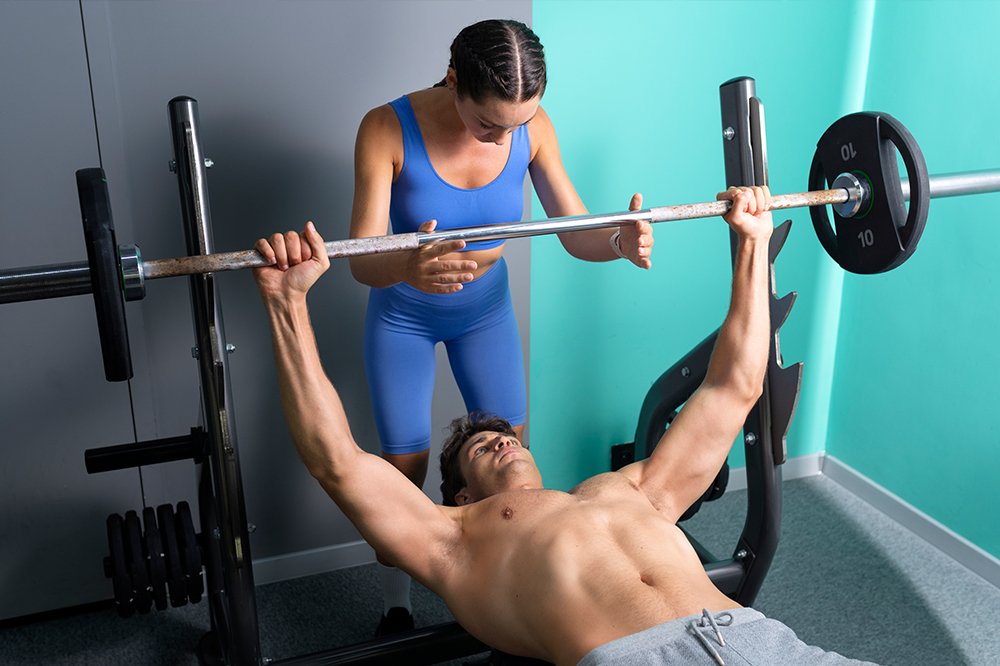
Spotters watch for signs of fatigue or poor form, stepping in before things go wrong. For example, during a bench press, they can grab the bar if your arms give out. This quick intervention prevents strains or worse.
Proper Spotting Techniques
A good spotter stands close, hands ready but not touching the bar unless needed. They communicate clearly, counting reps or offering cues like “You got this!” Training with a spotter builds trust and coordination.
Benefit 2: Improved Performance
With a spotter, you can push your limits safely, lifting heavier weights or squeezing out extra reps. A 2024 study in the Journal of Sports Science found that lifters with spotters increased their max bench press by 10% over six weeks. That’s real progress you can’t achieve alone.
Forced Reps and Progressive Overload
Spotters enable “forced reps,” where they assist slightly to help you complete a rep past failure. This technique drives muscle growth through progressive overload. Without a spotter, you’d stop short, missing gains.
A Story of Strength
Meet Lisa, a 35-year-old mom who started lifting with her friend as a spotter. “I was scared to go over 100 pounds on squats,” she says. “But with Jen spotting me, I hit 150 pounds in months. Her encouragement made all the difference.”
Benefit 3: Better Form and Technique
Poor form is a recipe for injury and stalled progress. A spotter provides real-time feedback, ensuring your lifts are safe and effective. They catch subtle mistakes, like a rounded back or uneven grip, that you might miss.
Common Form Mistakes
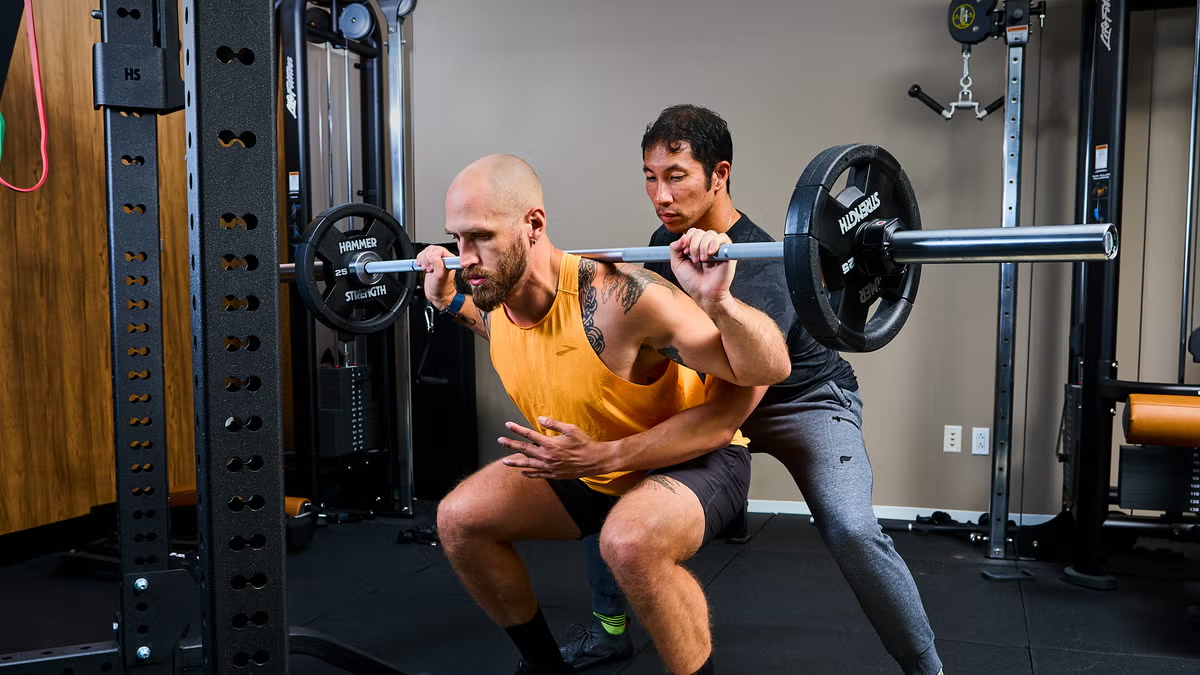
During squats, many lifters let their knees cave inward, risking strain. A spotter can cue you to push your knees out or keep your chest up. This guidance refines your technique and maximizes results.
Long-Term Benefits of Good Form
Proper form reduces joint stress and builds balanced strength. A 2025 study from the Journal of Orthopedic Research showed that correct lifting technique cuts injury risk by 40%. A spotter’s watchful eye helps you lift smarter, not just harder.
Benefit 4: Boosted Motivation and Accountability
Lifting can feel like a grind, but a spotter keeps you pumped. They cheer you on, hold you accountable, and make the gym feel less lonely. It’s like having a workout buddy who’s invested in your success.
The Psychology of Support
A 2023 study from the Journal of Sports Psychology found that social support increases exercise adherence by 35%. A spotter’s encouragement keeps you showing up, even on tough days. Their presence turns “I can’t” into “I will.”
Finding the Right Spotter
Choose someone reliable, attentive, and familiar with lifting. Gym friends, trainers, or even family members can work. Lisa’s friend Jen became her spotter after they bonded over shared fitness goals, proving chemistry matters.
Benefit 5: Mental Confidence
Lifting heavy barbells alone can be intimidating. A spotter gives you the courage to tackle challenging weights, knowing you’re safe. This confidence spills over into other areas of life, from work to personal goals.
Overcoming Fear of Failure
Fear of failing a lift stops many from progressing. A spotter removes that fear, letting you push past mental barriers. “With my spotter, I stopped overthinking and just lifted,” says Mark, a 42-year-old accountant who doubled his deadlift in a year.
Building a Growth Mindset
Each successful lift with a spotter reinforces your belief in your abilities. A 2024 Harvard Health report noted that exercise with social support boosts self-efficacy. This mental edge makes you feel unstoppable.
Pros and Cons of Using a Spotter
Pros:
- Reduces injury risk by 60%, per NSCA.
- Enables heavier lifts and forced reps for faster gains.
- Improves form, preventing long-term issues.
- Boosts motivation and mental confidence.
- Makes workouts more social and fun.
Cons:
- Requires coordinating with a partner.
- May feel intrusive for those who prefer solo workouts.
- Dependent on the spotter’s skill and attentiveness.
How to Find a Spotter
Don’t have a lifting buddy? Here’s how to find one:
- Ask a Gym Friend: Look for someone with similar goals or schedules.
- Hire a Trainer: Many gyms offer spotting as part of training sessions.
- Join a Class: Group strength classes often include spotting partners.
- Use Gym Staff: Some gyms have staff available to spot on request.
- Online Communities: Forums like Reddit’s r/Fitness connect you with local lifters.
Where to Learn Spotting Techniques
Check these resources:
- National Strength and Conditioning Association for spotting guides.
- Local gyms for workshops or trainer-led sessions.
- YouTube channels like Athlean-X for video tutorials.
Best Tools for Safe Lifting
Enhance your workouts with these:
- Lifting Belt: Supports your core during heavy lifts ($20–$50).
- Wrist Wraps: Stabilize wrists for bench presses ($10–$25).
- Lifting Shoes: Improve stability for squats ($50–$100).
- Gym App: Track lifts with apps like Strong ($0–$30/year).
When You Can Lift Alone (Safely)
Not every lift needs a spotter. Lighter weights or machine-based exercises, like dumbbell curls or leg presses, are safer for solo workouts. For heavy barbell lifts (bench press, squats, deadlifts), always have a spotter or use safety equipment like a power rack.
Safety Alternatives to Spotters
If a spotter isn’t available:
- Use a Power Rack: Safety bars catch the barbell if you fail.
- Lower Weights: Stick to 70–80% of your max for solo lifts.
- Practice Form: Use mirrors or record yourself to check technique.
- Avoid Failure: Stop short of muscle exhaustion to stay safe.
Comparing Spotters to Safety Equipment
| Option | Pros | Cons |
|---|---|---|
| Spotter | Real-time feedback, motivation | Requires a partner, coordination |
| Power Rack | Reliable, always available | Bulky, expensive, no encouragement |
People Also Ask (PAA)
Answers to common Google PAA questions about lifting with a spotter:
Why do you need a spotter for weightlifting?
A spotter ensures safety by assisting during heavy lifts and correcting form. They reduce injury risk by 60%, per the NSCA, and boost performance. They’re essential for barbell exercises like bench presses or squats.
Can you lift weights alone safely?
Light weights or machine exercises can be done alone safely. For heavy barbell lifts, use a power rack or lower weights to avoid injury. A spotter is ideal for maximum safety and progress.
What exercises require a spotter?
Heavy barbell lifts like bench press, squats, and overhead presses need spotters. These exercises risk entrapment or injury if you fail. Machines or lighter dumbbells are safer solo options.
How do you ask someone to spot you at the gym?
Politely approach someone and say, “Hey, could you spot me for a few reps?” Explain the lift and how many reps you’re aiming for. Most gym-goers are happy to help if asked respectfully.
The Science Behind Safe Lifting
Lifting with a spotter aligns with safety guidelines from the American College of Sports Medicine, which recommends supervision for heavy lifts. A 2025 study in the Journal of Strength and Conditioning Research found that spotters improve lift success rates by 15%. Proper form also reduces joint stress, per the Journal of Orthopedic Research.
Spotters and Muscle Growth
Spotters enable progressive overload, key to muscle hypertrophy. By assisting with forced reps, they help you lift 5–10% more weight, per a 2024 study. This pushes muscles to adapt and grow stronger.
Injury Prevention Stats
The CDC reports that weightlifting injuries cost the U.S. $7 billion annually in medical expenses. Spotters cut this risk significantly, especially for beginners. Combining spotters with proper warm-ups and stretching maximizes safety.
FAQ: Your Spotter Questions Answered
Q: Do I need a spotter for every workout?
A: No, spotters are essential for heavy barbell lifts like bench press or squats. Lighter exercises or machines are safer alone. Use a power rack if no spotter is available.
Q: Can a beginner be a spotter?
A: Yes, if they’re trained on spotting techniques and understand the lift. Start with lighter weights to build confidence. Experienced spotters are ideal for heavy lifts.
Q: How do I spot someone safely?
A: Stand close, hands ready but not touching the bar unless needed. Watch for form issues or fatigue. Communicate clearly, offering cues like “Push!” or “One more!”
Q: Are power racks as good as spotters?
A: Power racks are reliable for safety but lack the motivation and feedback of a spotter. They’re a great backup if you’re lifting alone. Spotters offer a human touch.
Q: How do I find a spotter at a new gym?
A: Ask gym staff, join group classes, or connect with regulars during quieter hours. Online forums like r/Fitness can also link you with local lifters.
The Bigger Picture: Lift Smart, Lift Together
Lifting barbells alone might seem brave, but it’s a gamble you don’t need to take. A spotter transforms your workouts, making them safer, more effective, and way more fun. Whether it’s a gym buddy, trainer, or power rack, don’t go it alone. Grab a partner, hit the weights, and build strength with confidence. Your body—and your ego—will thank you.